Services
By following the basic belief that all illness and pain stem from a disharmony of Chi (vital energy), Marilyn incorporates in her practice several methods to harmonize this energy including but not limited to acupuncture, electro-acupuncture, cupping, moxibustion, Chinese herbal medicine, Chi-moving exercises, and diet recommendations.
Acupuncture
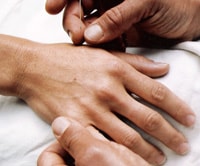
Acupuncture is one of the oldest, most commonly used medical procedures in the world. Originating in China more than 2,000 years ago, acupuncture became widely known in the United States in 1971, when New York Times reporter James Reston wrote about how doctors in China used needles to ease his pain after surgery.
The term acupuncture describes a family of procedures involving stimulation of anatomical points on the body by a variety of techniques. American practices of acupuncture incorporate medical traditions from China, Japan, Korea, and other countries. The acupuncture technique that has been most studied scientifically involves penetrating the skin with thin, solid, metallic needles that are manipulated by the hands or by electrical stimulation.
Acupuncture is used to encourage natural healing, improve mood and energy, reduce or eliminate pain, and improve function of affected areas of the body. It is safe and effective and is often successfully used as an alternative to medications or even surgery. Relief is often obtained with acupuncture when traditional medical therapy has failed.
Moxibustion
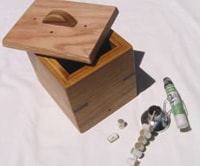
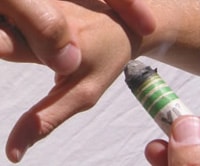
Moxibustion is a traditional Chinese medicine technique that involves the burning of mugwort, a small, spongy herb, to facilitate healing. Moxibustion has been used throughout Asia for thousands of years; in fact, the actual Chinese character for acupuncture, translated literally, means "acupuncture-moxibustion." The purpose of moxibustion, as with most forms of traditional Chinese medicine, is to strengthen the blood, stimulate the flow of qi, and maintain general health.
There are two types of moxibustion: direct and indirect. In direct moxibustion, a small, cone-shaped amount of moxa is placed on top of an acupuncture point and burned. In indirect moxibustion, a practitioner lights one end of a moxa stick, roughly the shape and size of a cigar, and holds it close to the area being treated for several minutes until the area turns red.
Cupping
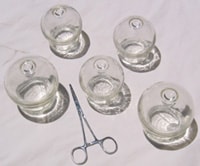
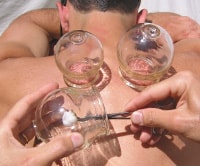
Cupping therapy is an ancient form of alternative medicine in which a therapist puts special cups on your skin for a few minutes to create suction. People get it for many purposes, including to help with pain, inflammation, blood flow, relaxation and well-being, and as a type of deep-tissue massage.
The cups may be made of glass, bamboo, earthenware, or silicone. Cupping therapy might be trendy now, but it's not new. It has been part of Middle Eastern and Asian cultures for thousands of years. One of the oldest medical textbooks in the world, the Ebers Papyrus, describes how the ancient Egyptians used cupping therapy in 1,550 B.C.
Gua Sha
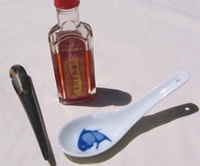
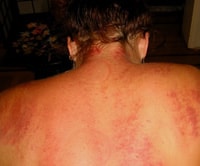
Gua sha is a natural, alternative therapy that involves scraping your skin with a massage tool to improve your circulation. This ancient Chinese healing technique may offer a unique approach to better health, addressing issues like chronic pain.
In gua sha, a technician scrapes your skin with short or long strokes to stimulate microcirculation of the soft tissue, which increases blood flow. They make these strokes with a smooth-edged instrument known as a gua massage tool. The technician applies massage oil to your skin, and then uses the tool to repeatedly scrape your skin in a downward motion.
Gua sha is intended to address stagnant energy, called chi, in the body that practitioners believe may be responsible for inflammation. Inflammation is the underlying cause of several conditions associated with chronic pain. Rubbing the skin's surface is thought to help break up this energy, reduce inflammation, and promote healing.
Electro-Acupuncture
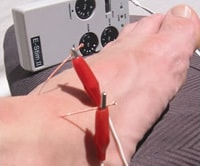
Electroacupuncture is quite similar to traditional acupuncture in that the same points are stimulated during treatment. As with traditional acupuncture, needles are inserted on specific points along the body. The needles are then attached to a device that generates continuous electric pulses using small clips. These devices are used to adjust the frequency and intensity of the impulse being delivered, depending on the condition being treated.
Electroacupuncture uses two needles at time so that the impulses can pass from one needle to the other. Several pairs of needles can be stimulated simultaneously, usually for no more than 30 minutes at a time.
Chinese Herbs
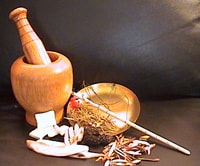
Chinese herbal medicine is part of a larger healing system called Traditional Chinese Medicine. Herbs are prescribed to restore energy balance to the opposing forces of energy — Yin and Yang — that run through invisible channels in the body.
Chinese herbal medicine uses a range of herbs, minerals, and animal products. The herbs can be used as teas, powders, capsules, tinctures, or topical preparations. Practitioners use herbs to prevent or treat health conditions. They may use a single herb or a combination of herbs.
Chinese herbal medicine has been used for centuries. Among its oldest text is a 2,000-year-old book called the Shennong Bencao Jing, which lists 365 medicines derived from minerals, plants, and animals.